

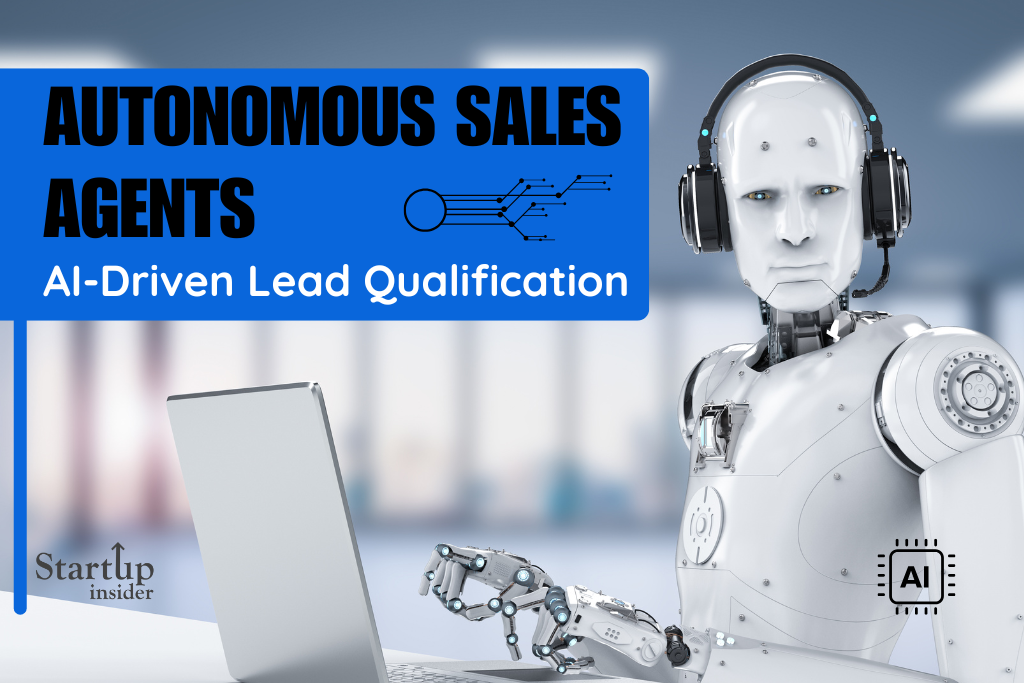
In today’s fast-paced B2B environment, autonomous sales agents—AI-powered systems that independently qualify and nurture leads—are revolutionizing the sales function. By automating routine tasks such as lead scoring, enrichment, and personalized outreach, these agents free human teams to focus on high-value activities. This blog explores what autonomous sales agents are, their core capabilities, business benefits, implementation steps, challenges, and future outlook.
What Are Autonomous Sales Agents?
An autonomous sales agent is an AI-driven virtual assistant designed to manage parts of the sales process—from initial prospect evaluation to routing qualified leads—without ongoing human oversight. Unlike basic chatbots or workflow automations, these agents leverage machine learning, natural language processing (NLP), and predictive analytics to:
-
Assess intent and fit across email, web forms, SMS, and voice channels.
-
Enrich lead profiles in real-time using firmographic, demographic, and behavioral data from CRM and third-party sources.
-
Score and segment leads based on Ideal Customer Profile (ICP) criteria and engagement signals.
-
Automate follow-ups and route hot leads directly to sales reps or CRM workflows .
Autonomous agents continuously learn from every interaction, refining their qualification models to improve accuracy over time.
Core Capabilities
-
Lead Scoring & Segmentation
AI models assign dynamic scores by analyzing attributes like job title, company size, past interactions, and buying signals. This data-driven approach eliminates manual bias and scales effortlessly to thousands of leads. -
Data Enrichment
Agents integrate with tools such as Clearbit, LinkedIn, or internal databases to populate missing fields—industry, revenue, location—instantly improving lead completeness and qualification precision. -
Intent Detection
By monitoring multi-channel engagement (email opens, website behavior, chat messages), agents gauge prospect interest and urgency, surfacing high-intent leads for immediate follow-up. -
Personalized Outreach
Leveraging NLP, agents generate customized emails or messages that reference a lead’s industry, role, or previous interactions, boosting engagement rates. -
Routing & Alerts
Once leads meet predefined thresholds, agents automatically notify sales reps, create CRM tasks, or trigger marketing workflows, ensuring no opportunity slips through the cracks. -
Continuous Learning
Every qualified or disqualified lead serves as new training data, enabling the agent’s models to refine scoring weights and communication strategies over time.
Business Benefits
Implementing autonomous sales agents yields substantial advantages:
| Benefit | Impact |
|---|---|
| Efficiency | 40% increase in lead qualification speed, reducing manual sifting and follow-up time |
| Accuracy | Data-driven scoring removes human bias, improving conversion rates by up to 50% |
| Scalability | Capable of handling thousands of leads simultaneously, versus manual SDR limits |
| Cost Reduction | Frees sales development reps (SDRs) from repetitive tasks, lowering operational costs |
| Enhanced Lead Quality | Prioritizes high-intent prospects, driving a 300% increase in qualified leads in case studies |
| 24/7 Availability | Operates round-the-clock, engaging leads across time zones without additional headcount |
Global adoption is surging: the AI agent market is projected to reach $7.63 billion in 2025 (CAGR 44.8% from 2024–2030), and 85% of enterprises are expected to deploy AI agents by year-end.
Implementing Autonomous Sales Agents
-
Define Objectives & ICP
Clarify which tasks—lead scoring, enrichment, routing—will yield the highest ROI and establish Ideal Customer Profile criteria for qualification. -
Select the Right Platform
Evaluate vendors for integration capabilities (CRM, marketing automation, third-party data), AI model transparency, and customization options. -
Data Preparation
Ensure high-quality input: clean CRM records, unify data sources, and set up real-time enrichment feeds. -
Pilot & Train
Begin with a limited segment (e.g., a specific geography or product line). Monitor performance, gather feedback, and refine AI-driven rules and scoring models. -
Scale & Integrate
Roll out agent workflows across additional pipelines. Integrate with CRM tasks, notifications, and analytics dashboards to track key metrics—qualification rate, response time, and conversion uplift. -
Continuous Optimization
Regularly review AI performance. Retrain models with new interaction data, adjust ICP parameters, and A/B test outreach messaging for improved engagement.
Challenges & Considerations
-
Data Quality & Privacy
Incomplete or outdated CRM records can skew scoring. Ensure compliance with GDPR, CCPA, and other regulations when handling personal data. -
Change Management
Sales teams may resist automation. Provide transparent reporting on agent decisions, involve SDRs in workflow design, and highlight time savings on manual tasks. -
Integration Complexity
Deep CRM and third-party tool integrations require coordination between sales, marketing, and IT teams. Allocate sufficient resources for initial setup and ongoing maintenance. -
Model Transparency
Black-box AI models can engender distrust. Opt for solutions offering explainable AI, showing which factors influenced lead scores.
Future Outlook
As AI research advances, autonomous sales agents will evolve beyond qualification to full-funnel engagement—handling demo scheduling, contract negotiation, and even closing small deals. Integration with large language models (LLMs) will enable richer, context-aware conversations, while multimodal AI will incorporate video and voice analysis for deeper intent insights.
Hybrid human-AI teams will become the norm: AI agents managing routine qualification and follow-ups, with human sellers focusing exclusively on complex negotiations and relationship building. Organizations that embrace this synergy will outpace competitors, closing deals faster and at higher volumes.
Conclusion
AI-driven autonomous sales agents represent the next frontier in sales automation. By automating lead qualification, enriching prospect data, and delivering personalized outreach at scale, these agents unlock unprecedented efficiency and growth. With robust implementation and continuous optimization, businesses can transform their sales funnel—freeing human teams to concentrate on strategic, high-value activities while AI handles the heavy lifting.
Embrace autonomous sales agents today to stay ahead in an increasingly competitive marketplace.
Read More: Prompt Engineering for Business Intelligence: Templates & Best Practices