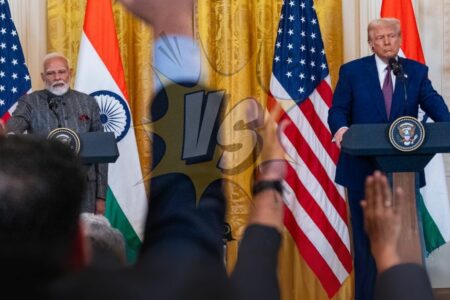


NEW DELHI, Aug 5 (Startup Insider) – Congress MP Manish Tewari on Monday delivered a pointed response to U.S. President Donald Trump’s threat to raise tariffs on Indian imports over Russia oil purchases, invoking India’s historic resilience during the 1971 Indo-Pakistan War.
Lead
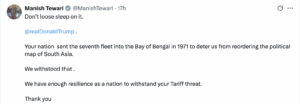
In a terse post on X (formerly Twitter), Tewari wrote, “Don’t lose sleep on it, @realDonaldTrump. Your nation sent the Seventh Fleet into the Bay of Bengal in 1971 to deter us from reordering the political map of South Asia. We withstood that. We have enough resilience as a nation to withstand your tariff threat. Thank you very much for your attention to this matter, SIR.”

Key Points
-
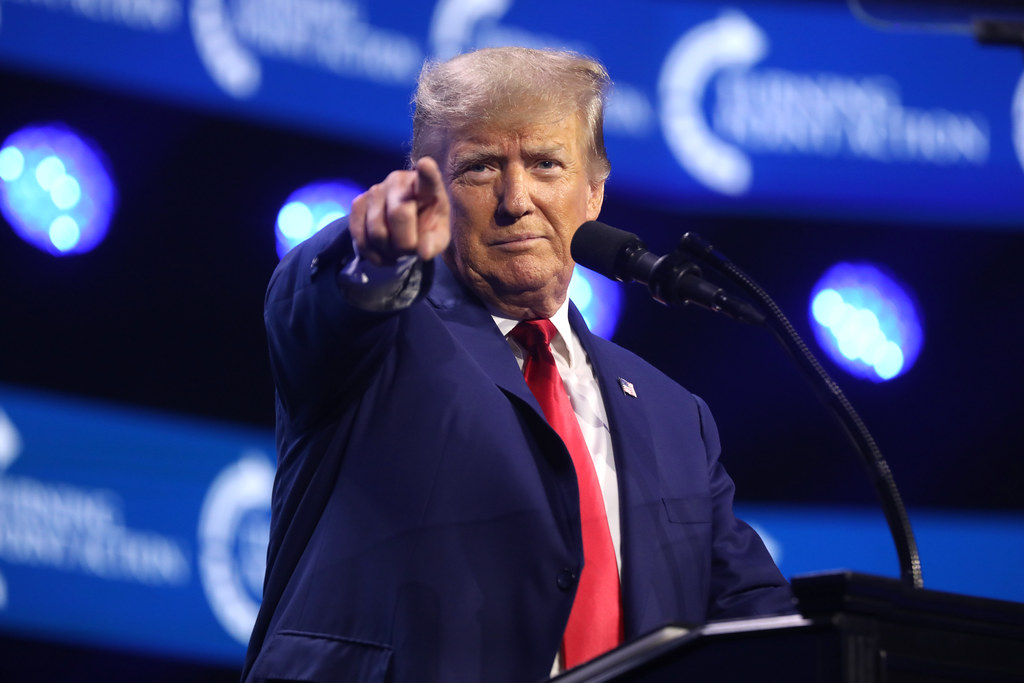
Trump’s Warning: On July 30, Trump accused India of buying “massive amounts of Russian oil” and reselling it at a profit, pledging to “substantially raise the Tariff paid by India to the USA” over New Delhi’s energy ties with Moscow.
-
Tewari’s Retort: By invoking the 1971 dispatch of the U.S. Seventh Fleet—meant to intimidate India as it supported the Bangladesh liberation movement—Tewari underscored India’s ability to withstand external pressure and affirmed sovereign decision-making on energy security.
-
Political Underpinnings: Tewari’s message diverges from the official Congress stance, which has criticised Prime Minister Narendra Modi’s handling of U.S. relations, but aligns with broader calls across parties to defend India’s “strategic autonomy.”
Historical Context
In December 1971, as India intervened to support East Pakistani freedom fighters, President Richard Nixon ordered Task Force 74 of the U.S. Seventh Fleet into the Bay of Bengal. The move, designed to deter India from advancing toward victory, was countered diplomatically and militarily—ultimately failing to prevent the creation of Bangladesh. India’s swift campaign and decisive victory underscored its strategic resolve and helped reshape South Asia’s political landscape.
Domestic and Diplomatic Reactions
– Government Response: The Ministry of External Affairs reiterated India’s sovereign right to pursue energy policy based on market dynamics and national interests, rejecting “unwarranted” threats on international platforms.
– Opposition Voices: While some opposition leaders urged restraint and diplomatic engagement, others hailed Tewari’s forthright tone as a necessary assertion of national dignity.
– Industry Impact: Markets shrugged off the tariff threat, with ports, refineries, and energy stocks seeing only modest volatility. Analysts note that India’s diversified import sources and record foreign reserves provide buffers against such headline risks.
Expert Analysis
Geopolitical analysts observe that Trump’s tariff warning carries limited leverage since India sources less than 5% of its total goods exports to the U.S. for oil and energy sectors. Moreover, ongoing U.S.-India negotiations on trade facilitation and supply chain resilience suggest room for compromise before imposing punitive tariffs.
What’s Next?
India and the U.S. are scheduled to meet later this month in Washington for trade and investment talks. Government insiders indicate New Delhi will press for a balanced outcome that preserves energy security and protects export-oriented industries. Meanwhile, India is deepening ties with other major suppliers in the Middle East, Africa, and Central Asia to diversify its oil import basket.
Conclusion
Tewari’s sharp reminder of India’s 1971 defiance speaks to a broader narrative: as India navigates complex geopolitical pressures, it draws strength from its history of strategic autonomy and resilience. While diplomatic channels remain open, political leaders across the spectrum concur that India will not yield to economic coercion—just as it stood firm more than five decades ago.
Source: Business Today